DEC 25: Get Kyushu-Pilled, The Sake of it All; Molly's Travelogue Part 1
Get Kyushu-pilled Part 1: The Sake of it All
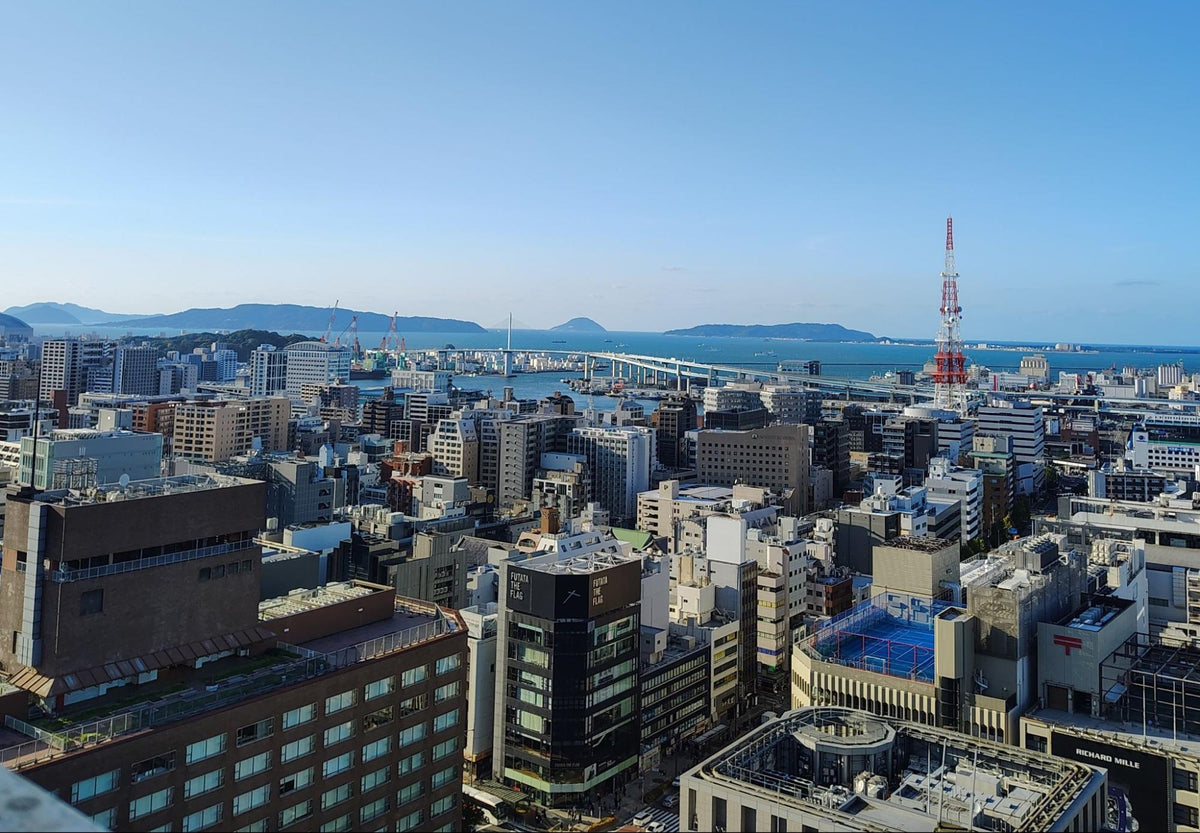
Though not convenient or nearby at all, before making my way up to Fukushima for a brewing internship at Niida Honke, my husband Erik and I made a stop in Kyushu to dig deeper into the area after a memorable yet brief stay in Fukuoka last January. There’s just something comfortable about Fukuoka, perhaps it reminds me a bit of Portland- neighborhood borders determined by rivers (and so many bridges!), an iconic food & bev scene, and folks are just friendly and laid-back as all get out. A good sized, cosmopolitan city that serves as a gateway to the rest of East Asia, with plenty of hustle and bustle, but less of the sprawl you’d find in Japan’s other major cities. This time around, we luckily didn’t have to explore on our own, as we were led around by Miyawaki Futoshi, Kyushu travel wizard and friend of Okan Lover’s Red Kohei. Thanks to him we got to explore quarries and kilns in Arita, a daimyo’s estate in a canal town by the Ariake Sea, Fukuchiyo Shuzo, and Ureshino tea. For the sake of keeping this a reasonable length, this installment will just focus on the sake.
In just about every izakaya we hit, any mention of me being there to get my hands on as much sake as possible was met with a raised eyebrow and a “you’re in Kyushu, drink shochu!”
Look, there’s a really good point there! Kyushu is undeniably the land of shochu-- barley and sweet potato crops proliferate, and shochu distilling is easier to manage than sake brewing in Kyushu’s warmer, subtropical climate. More than a third of Japan’s shochu distillers are on this one small island. But there’s a fascinating and undersung sake scene as well. Roughly 2,500 years ago, Kyushu was where rice farming was first introduced to Japan via southern China and the Korean peninsula before gradually working its way up Honshu. Excavated irrigation canals, paddy formations and tools from the Yayoi period look much the same as they do today. Furthermore, Fukuoka prefecture is one of the leading producers of sake rice, and Yamada Nishiki from Itoshima is renowned for its quality. And so it would stand that Fukuoka has its fair share of breweries making fine, sweetly rich Southern sake, would it not? Then right next door in Saga prefecture, 19th century daimyo Nabeshima Naomasa bet heavily on the growth of breweries in the region, as rice held far more value after being processed into sake. You can still get a sense of the prosperity wrought by sake brewing in Kashima’s Sakagura Dori (lit. Sake Brewery Street in English). Further south in Kumamoto, you have folks like the Honda family of Chiyonosono Shuzo, who’ve found a way to cultivate the heirloom Shinriki rice in a warm, humid climate. The Hondas will probably be the first to tell you this is a pain, but they do it anyway, and naturally, prolific rice yields prolific sake. And don’t even get me started on Kumamoto and No. 9 yeast.
One day, I promise, I will dip into the wonderful world of shochu, but there is just too much sake in front of me first.
Craft Bars and Yatais in the Heart of the City
One of our first orders of business was dropping by LIBROM Craft Sake Brewery to say hey ahead of their appearance at Fuyu Fest where they’ll be sharing their sake in the US for the first time. On a side street dotted with izakaya and snack bars in Fukuoka’s Takasago neighborhood, the LIBROM space doubles as a brewery and bar. From the intimate 7-8 seat counter, you can likely peek through the large window and catch co-founder and head brewer Anami Shunpei at work. A craft brewery in an urban snack bar is about as cozy as you can imagine: plastic buckets from the hardware store are used for handwashing rice, and a restaurant steamer for pork buns is the makeshift rice steamer. I’ve seen closets larger than the koji room, and the entirety of their output is produced in four small 316 liter tanks. This day, one of the tanks held a resting batch inspired by Anami’s time living in Frankfurt and strolling through the Christmas market with some steaming gluhwein. Kyoho grapes from a winery in nearby Tanushimaru, upcycled spices from Abe Shuzo’s craft cola, citrus from Kumamoto and local table rice came together for something that tasted and smelled more like a mulled wine than a sake. It heated like a dream, and felt like pure Christmas nostalgia. After the brewery tour we cozied up to the bar to try as much of their line up as we could. The flavors of amaou strawberries, loquats, pears, peaches, grapes and citruses, all from Kyushu are the focus, with LIBROM’s connection to locality an obvious pride point. In particular, a grape and oak chip sake that repurposes old barrels from the aforementioned winery stood out- strangely familiar, yet unlike any other sake I’ve had, craft or otherwise. Strawberry season is in full swing in Fukuoka right now, and the bright ‘n’ strawberry doburoku was a ray of sunshine on my Autumn-entrenched heart. A small menu of iberico ham and koji fermented drinking snacks tempted, but we had to save room for the next stop. 
When the work day ends and the sun starts to set, mobile food stalls called yatai pop up on the sidewalks through the city center. Most have fewer than 10 seats, and boast impressively large menus for such tiny kitchens that get set up and broken down daily. The stalls all have their specialties- yakitori, oden, ramen, seiro-mushi, even pour over coffee and it's common to hop around and hit several stalls in one evening. But on this night Futoshi (who you’ll also be meeting at Fuyu Fest!) took us to Yatai Chusuke where we met up with a clocked out Anami-san, his wife and a few other community members. Our party took up most of the stall until close to closing time, blitzing through high balls, passing around plates of stir-fried gizzards and gyoza, and chatting with the proprietors. Ever eager to contribute to Nina’s regional oden research mission, I’d read that the Hakata oden staple is satsumaage, a puffy, round fishcake. Of course, I order one, as well as gyoza maki, a homemade dumpling wrapped in a fishcake and fried. The broth is light and clean, I’m surrounded by smoke, laughter and chatter, and I use way too much mustard. Precariously perched on my tiny fold out stool, the balmy, evening breeze blows the plastic sheet separating us from the street into my back. Someone on the other side of the counter orders some gyoza and Mama-san pulls out a pack of wrappers and filling and starts folding them to order. Futoshi nudges me to call out, “Mama-san, ippai wa dou desu ka?” Kind of understanding, but not really, I say it. Mama laughs, pours herself a beer and joins us all in a hearty kanpai. This is why I wanted to come back to Fukuoka.
Taking a Stroll Along Sakagura Dori
A few days later, we rode out to Hizen Hamashuku in Kashima, Saga to visit Fukuchiyo Sake Brewery, the makers of Nabeshima. Hamashuku still has the feeling of an old Edo period post town, with many of the sake and soy sauce breweries in operation then still going today. Iimori Naoki is the 3rd generation leader of Fukuchiyo, and it’s clear he proudly uses Nabeshima’s success as a platform to bolster the Hizen Hama Sakagura Dori area as a whole. Their properties are sprinkled along the main drag between a tiny mom and pop coffee roaster, antique shops and soy sauce breweries. And though their brand leans more towards the modern and avant garde, the facades reserve their Edo post-town spirit.

We check in at the original merchant house renovated by architect Kengo Kuma into an ultra luxe auberge suite with a built-in kaiseki restaurant. We’re taken upstairs to see the suite, and gaze out the bedroom window into a pristine, private garden. The room is filled with the Iimori family’s art collection, and the light fixtures are Kuma’s original design. I start to take off my shoes, but am told we won’t actually be staying there. What?? And so we are led outside and a few doors down into another suite/kaiseki, bigger and somehow more beautiful than the last, decked out with an outdoor stone tub, some ridiculously fluffy looking beds, and bikes to ride around town. We’re informed we won’t be staying here either, and head down the street a bit further to the third and final guesthouse- a sprawling villa that easily sleeps 8. At this point my eyes are so stuffed with wonder that I don’t really know what to do with myself. The design is ultra modern, with exposed original beams being the focal point of the interior. The fridge is well stocked with a variety of Nabeshima sake, as well as senbei to enjoy them with. Upstairs, a pitch dark meditation room is a respite for those experiencing sensory overload. Out back, a sauna and in ground stone rotenburo beckon me. We can barely believe it but this is where we’ll be staying. I can finally take off my shoes, but not for long, as it’s time for the brewery tour! I’m stoked of course, since it’s what I’m here for in the first place, but it’s hard to leave the gorgeous suite for even a moment. I need to crack open some tokubetsu honjozo and luxuriate! But there will be time for that later…
Fukuchiyo has been a steward of the area for just over a century now, and just celebrated their 100 year anniversary in 2023. To commemorate their centennial, a series of renovations and expansions went underway, the result being this luxurious auberge, a brand new cafe slash Italian restaurant, and the kaiseki dining counters. Tours of the brewery are available only to the guests of the three suites and led by one of the available brewing staff or president-toji Iimori-san himself. The tour began in the old rice polishing area converted into a gallery space for meetings and private tastings. As he leads us into the brewery proper, he makes us aware that no photography is allowed inside (sorry!). Work is done for the day, so it’s a quiet tour through still drying stacks of steaming trays and neat rows of cleaning tools, and the mega chilly storage room where crates of sake are piled high waiting for their release. We eventually end up at the tanks. Iimori-san sets up a ladder for us to climb up and stick our heads in one of them to see what's going on. What’s going on is fermentation, baby! The mash recently received its third addition of rice and water and is heartily bubbling away, giving off the juiciest ginjo aromas of all time. Unable to resist, and fully aware of what’s going to happen, I get a little closer anyway for one more sniff, and get a nose full of CO2 that goes to my brain like a big hit of wasabi and nearly knocks me off the ladder. Iimori-san thinks it's funny, so we encourage Erik to do the same. Lastly, a bit of just finished nama junmai ginjo is drawn straight from a tank and served to us in 19th century French glass Iimori chooses from a case full of antique and vintage serveware. The glasses come with a laminated card with details of their production, and nearly distract me from the sake inside. Nearly. The Nabeshima profile is quintessentially southern- juicy and round from warmer weather, mineral rich water, and soft rice. And when it's so fresh out of the tank, the vibrancy is palpable.
After a mind-blowing Italian brunch at the brewery’s cafe, we only had a little time for a brief stroll down Sakagura Dori before catching our train back to Fukuoka. Only able to check out one shop, I carefully chose Iimori Shuzo, which had caught my eye as it shares the family name of Fukuchiyo. It turns out the brewery stopped making sake decades ago, and now focuses solely on pickles fermented in aged sake lees, with a small retail section dedicated to the 13 breweries in the area. As soon as I stepped in, the proprietress plied me with crunchy, funky samples, and before I knew it, I’d bought two giant bags of pickled ginger and gourd before I could even think about how to keep them refrigerated through the next week of hotels and trains.
As I power walked to the station, pickles in hand, I kept seeing more things I wanted to check out. Of all the brewers in the area with their rich individual histories, I lamented that I barely scratched the surface of one. An overnight stay in Hizen Hamashuku isn’t enough, but it gives me plenty of reasons to return.
LIBROM Craft Sake Brewery
1 Chome-21番27号 Takasago, Chuo Ward, Fukuoka, 810-0011, Japan
Chusuke
4 Chome-2-36 Tenjin, Chuo Ward, Fukuoka, 810-0001, Japan
Onyado Fukuchiyo
Japan, 〒849-1322 Saga, Kashima, Hamamachi, 乙2420-1 乙2420-1
Iimori Shuzo
甲122 Furueda, Kashima, Saga 849-1321, Japan