NOV 26: The Case for Atsukan + Onda 48
THE CASE FOR ATSUKAN

This month, Nina tasked me with introducing the club pack by sharing why atsukan is important to us here. This should be a piece of cake, but I really found myself struggling to find the words that tie it together succinctly! Warming sake is a blend of skill, art, and instinct, and oh-so-easy to romanticize, which we love to do here. On the drinker’s side of it, a beautiful sake that’s been beautifully warmed reaches straight to the heart and radiates out, smoothing the jagged edges of a rough day, and softly steaming the gunk off the lens of perception that builds up over a lifetime. On the okanban’s (an okanban is the person warming it) side, where I find myself most often behind the counter at Sunflower, it’s an exercise in connection and reverence. How is this particular bottle showing, on this particular day, and how can I make it suit the bar’s mood at this particular moment? If I warm this carafe just so, will it form a mariage (the Japanese term for pairing) with my guest’s drinking snacks? When my solo bar guests ask me for extra cups so they can share their atsukan with each other, there is no greater professional satisfaction.
Atsukan pulls one out of the mind and into the body. Once you find a comfortable home set up, you may find yourself trusting your nose over a thermometer. No matter which bottle you chose as your second, I encourage you to experiment with temperature on both club sake, even just a little bit. Consider heating a tool to unearth hidden sides of the sake you may not have otherwise seen. Unlearning the idea that warming is only what you do to make poor quality sake palatable is liberating, and essential to understanding the beverage better.
ABOUT THE BOOKLET
Noticing a lack of understanding for heated sake among her peers, and fired up to share its depth and potential after her tenure at hot sake focused restaurant Takasaki no Okan in Tokyo (which you should absolutely, 100% visit if you can), Yukawa Reina started Atsukanbu, or Hot Sake Club. A typical club meeting starts with Yukawa sharing a brief demonstration of the available tools and a welcome sake warmed multiple ways. Then participants set out on their own path, grouping up around tabletop stoves to heat their own sake with a variety of temperature baths and vessels to choose from. The meetings are set up with common household items like tabletop stoves, soup pots, and tempered glass carafes so participants can replicate the processes at home. Industry vets and sake hobbyists alike find common ground geeking over their findings with each other, making sure their fellow club member’s cups stay full.
The included booklet is handed out at all of Atsukanbu’s meetings. It’s part manifesto, part instruction manual, with room to record your own notes, because let’s be real, even with the best intentions to be intentional and take notes, it always breaks down into an atsukan party anyway.
If you find any beautiful expressions of the club sake when you do your own warming experiments, please let us know! After all, great atsukan is even better shared. ❤️🔥
-Molly
ONDA 48: THE ONE YOU ALL RECEIVED

Regulars of Sunflower may recognise the Onda brand from Onda 88, an 88% polish, rustic and ricey 18% ABV junmai that, for all its gritty intensity, still finishes clean and pure. Because the acidity and umami are so forward, Onda 88 tastes as if it were made with Yamahai or Kimoto (wild fermentation) methods, but no– it’s just a pure ode to the flavor of the rice, a series of brewing decisions made to emphasize the character of the fields they grow themselves. The owner Onda-san explained in an interview that the 88% release was originally brewed for a local restaurant to stand up to its richer dishes. Leaving more of the grain’s outer layer gives a more complex, heavier sake, and Ipponjime’s umami suits that. Will is going to tell you more about the brewery itself below (he did the research for us) but they’re really committed to their rice, like uniquely really committed, and for all the extraordinary efforts they go through to grow and brew it Onda 88 is only ~$29 on the shelf, Onda 48 only $36. That’s crazy, and it gave us a lot of breathing room to fill the rest of the club with fun, interesting releases.
Onda 48 is new for us. It’s a sake we special ordered just for November club after tasting it last Spring, and agreeing unanimously amongst ourselves (me, Molly, and Nodoguro’s beverage manager at the time, Erik) that it was the perfect choice for Fall. Onda 48 shares 88’s rice-forward rusticity but at 48% polish, making it a junmai daiginjo. The tension between earthiness and elegance make it uniquely perfect for Fall because it warms beautifully, it tastes like food, it tastes like a field of grain. There’s a soft sweetness reminiscent of wheat germ (remember that stuff?) and chestnut, an earnest, down-to-earth quality that is increasingly hard to find in junmai daiginjo. A grounding quality. I’d have this warm with seasonal sushi in a heartbeat (that sturdy quality stands up well to oily fish like sanma, saba, and katsuo), or hand-cut soba soba, if you’re lucky enough to have a neighborhood spot. But any cold-weather food: hot pot, roast chicken, pureed root vegetable soup, stuffed squash, would make a fine pair. Splash a little in your food, a little in your glass, a little in your guest’s glass.
- Nina
ONDA SHUZO, NAGAOKA CITY, NIIGATA
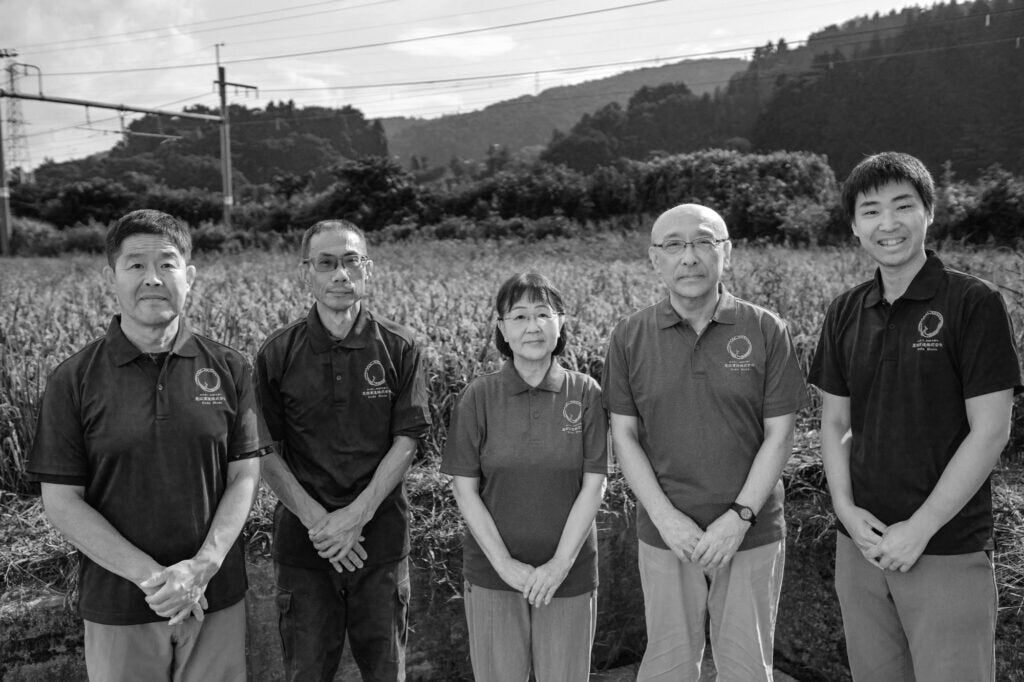
Onda Shuzo is a super tiny, 5-person brewery in Nagaoka City, Niigata. All the rice used in their junmai sakes come from their own estate rice fields, exclusively planted with Ipponjime. With such a small staff, each member contributes to all aspects of farming and sake production. The sheer labor load that arises from a year-round schedule of planting to bottling and every step in-between, makes their mission statement: “Trusting in the rice, brewing sake” (米を信じ、SAKEを醸す) feel painfully understated.
In light of this love, attention and effort, Onda Shuzo puts particular emphasis on shepherding the inherent flavor of the rice, rather than transforming it with aromatic yeasts and modern techniques. This rice-first mentality can be seen (and tasted) in both their flagship Onda 88 and Onda 48. The 88%/48% polishing ratios were chosen to invoke a Japanese proverb that states, “Rice cultivation takes 88 folds of labor and time.”(八十八の手間) It is said that the kanji for “rice” (米) was created from kanji used to write 88 (八十八) in light of this proverb, although you do kinda have to turn a couple of them sideways… and use your creativity too… and well, the historical etymology of the 米 kanji suggests otherwise. (Great story though!)

It’s neither here nor there but I find myself wondering, if Onda’s rice cultivation takes 88 folds of labor and time, how many additional folds are required to usher that harvested rice into the sake we get to drink? (When are they gonna finally drop the Onda 176??)
Since 2024, all of Onda’s estate fields have been converted to cultivating Ipponjime sake rice. They’re so committed that they now buy their food rice because even those fields have been planted over to Ipponjime. Onda-san likes Ipponjime in particular because it retains much of the rice’s inherent flavor, matching the style he’s after. More pragmatically, Ipponjime grows shorter stalks (lower risk of falling over in storms), provides large yields, and has a short growing season, making it easier to cultivate and harvest as a tiny, 5-person team. Finally, Ipponjime has large grains with a big shinpaku (starchy core) similar to Gohyakumangoku– which, to be fair, is so widely available it’s almost boring.
In an interview with the Niigata Sake Association, Onda-san talks about his use of Ipponjime:
“Sake rice is often perceived as difficult to cultivate because the plants tend to grow tall and are prone to lodging (falling over). In contrast, "Ipponjime"—a variety that does not grow particularly tall—is relatively easy to farm.
"Developed in Niigata Prefecture in 1994, Ipponjime is a cross between 'Hyakumangoku' (the maternal parent) and 'Houhai' (the paternal parent). It is cold-resistant and, thanks to its shorter stature, highly resistant to lodging. Unlike the typical 'light and dry' (tanrei karakuchi) style, sake made from Ipponjime tends to be rich in the inherent flavor (umami) of the rice.
At Onda Shuzo, where we specialize in crafting sake with a rich, slightly sweet profile, we decided to take on the challenge of cultivating Ipponjime ourselves. For the past 20 to 30 years, we’ve dedicated all our rice paddies to growing sake rice, which means we now have to buy the rice we eat. We also keep the use of fertilizers and herbicides to an absolute minimum—though, naturally, that does mean our overall yield is somewhat lower.
The resulting sake is full-bodied—reminiscent of a full-bodied wine—with a deep, rich flavor and a pronounced umami. That is its true appeal.”
- Will


Onda’s mascot, the cutest lil‘ farmin’ and brewin’ crane, was drawn by a regular of a local liquor store that commissioned a new sake from Onda-san. While the name isn’t shared anywhere, she’s a local woman with an office job who guides town walks on weekends. She draws well enough that she painted that shop’s shutter, and her cranes are cute enough that people pick up the bottle on sight.